We left Edinburgh in the rain, early Thursday morning, and were delayed by an hour getting back to London due to flooding on the tracks. The trains in the UK have a reputation for running on time and you would have thought that we had been delayed by days rather than minutes judging from the number of times the engineer came on the intercom to apologize for the inconvenience.
Before checking into our hotel in Kensington, we stopped by Bloomsbury to pick up some baggage that we had stored in Andrea's office to lighten our load on the Scotland trip. John, one of the volunteers at the desk, updated us on the status of the riots that had broken out on August 6, in Tottenham, a northeastern neighborhood in London, after a peaceful protest of the death by police of a local man, Mark Duggan. While we were away, the looting and burning had spread in copy-cat fashion to other locations in London as well as the neighboring cities of Birmingham, Liverpool, Nottingham, and Bristol. The police appeared to be taken off guard at the magnitude and random nature of the violence, and they were indecisive and slow in putting a stop to it.
Prime Minister David Cameron and other MP's cut short their vacations and returned to London to deal with the crisis. Tube stops near rioting neighborhoods were temporarily closed and the football match between England and Holland at Wembley was cancelled. John said that on his street, the merchants removed merchandise from the display windows and boarded up their shops to prevent vandalism and looting by the bands of disgruntled youths that were roaming neighborhoods and recklessly destroying property and striking out at innocent bystanders.
By Thursday, August 11, when we returned to London, the crisis had abated and everything appeared to be under control. The neighborhoods had been calm and without incident for several nights, due to increased police presence. Scotland Yard had identified murder suspects and over a thousand people had been arrested in connection with the violence, looting, and robbery. The House of Commons was engaged in spirited debate on long term solutions for addressing the social issues underlying the violence, and Bill Bratton, former New York and LA police chief, had been called in to consult with British law enforcement on gang violence and social unrest, a decision which gained mixed reviews and a few raised eyebrows from the British press.
Most of the news coverage we managed to find in Edinburgh centered around the need for swift justice and accountability for the perpetrators of the senseless attacks on the innocent as well as the looting, and destruction of property. Interviews of law officials, clergy, social workers, politicians, as well as citizens on the street denounced the violence as unacceptable acts of thuggery and brutality by bands of youth, undisciplined and out of control. They called for increased security and protection across the city, and favored a zero tolerance approach, with severe consequences imposed on any individual involved in action resulting in the destruction of lives or property.
At the same time, there was a discernible sense of recognition among those interviewed, as well as from the coverage on the debates from the floor of the Commons, that the implementation of a "Get Tough on Crime" approach could never address the root cause of the problem, which appears to reside in the anger of a youthful underclass, unemployed and ineligible for university, with nothing but time on their hands to act out their frustration and disillusionment. They seemed to concur that while looting and burning can never be tolerated by civilized society, neither can the repression and deprivation of basic human needs be ignored in the process of protecting the resources of the privileged while ignoring the plight of the underprivileged.
In the midst of our sightseeing and fun, 2500 miles away from home, came the jolting reminder of the widening gap that exists in our world between Haves and Have Nots, which has been accentuated by a weak global economy, war, and natural disaster.
Competing with the story of the London riots that week, was the news of Standard and Poor's downgrade of the U.S. credit rating from AAA to AA-plus, sending the stock market into a tail spin. Headlines across the UK read"US Humbled" and news analysts talked endlessly about what this might mean for the US economy and how this would affect the outcome of upcoming political contests between Democrats and Republicans. Would Sarah Palin or Michelle Bachman succeed in ousting Mr. Obama?
It was not the ideal time to be travelling, in terms of dollar to pound exchange rate, and the news about the US economy was beginning to give me nightmares about what the trip would ultimately cost. I was reassured when I called home to touch base with Bill. He put everything in perspective for me with his classic response to my financial jitters: "Don't worry," he said, "It's only money."
Friday, September 2, 2011


Wednesday, August 31, 2011
The Highlands
Wednesday, we awoke to a dreary sky and pouring rain. We had made reservations with Scotland Tours to take an 8 hour drive into the Highlands in a 16 passenger van, to see Loch Ness and other sights along the way. Colin, our tour guide, met us promptly at 8:00 a.m., at the bus stop just yards from the entrance to our apartment. Dressed in kilt, hiking boots, and a polo shirt, he entertained us with an endless store of trivia, stories, and anecdotes from the moment he pulled out of Princes Street until he returned us, tired and waterlogged, to our door that evening around 7:00 PM.
As we headed out of Edinburgh, Colin explained that there are two major areas of Scotland, the Lowlands, that we were currently leaving, and the Highlands. The Highlanders were historically a spirited, independent, fierce, unafraid group of people, who owed their loyalty to their clan. Competing clans sometimes came to blows over land and cattle, and their battles were swift and brutal, often lasting less than half an hour. Many of the Highlanders were Jacobites, who opposed the reign of Protestant Mary and William of Orange (1688) and favored the return to the throne of the Stuarts under James II (of Scotland and VII of England). The Campbell clan proved an exception in that they were Protestant supporters of William and Mary, which put them at odds with the McDonalds, who were Catholic and loyal to the Stuarts.
The Highlands were so remote and wild that the inhabitants developed a code of hospitality that required any Highlander to extend food and lodging to any traveller who showed up at the door, even if the traveller were an enemy. One night, a group of travellers from the Campbell clan appeared at the home of a McDonald. The McDonald family took them in and gave the Campbells, their arch enemies, food and housing for two weeks. At the end of the two weeks, the Cambells violated the code and slaughtered their hosts in their beds, thus becoming the most hated clan in the Highlands.
If the Highlanders were individualistic, independent, and fierce, the Lowlanders, according to Colin, tended to be conventional, educated, well-to-do, and in touch with the fashions and trends of society. One of the most famous Lowlanders was William Wallace, leader and martyr in the wars for Scotish independence in the 1300's. His statue guards the entrance of Edinburgh Castle, flanked by Robert the Bruce, warrior and first king of independent Scotland. Most Americans remember him from the movie Braveheart, where Mel Gibson, in the role of Wallace, raised his sword to lead the charge for "Fraaaaydom."
Colin touted the movie Braveheart, which he credits with popularizing the Highlands and bringing untold numbers of tourists to Scotland. However, he pointed out a major inaccuracy in the movie. Wallace was a Lowlander and would never have painted his face, worn a kilt, and behaved as a Highlander. "You have to understand," he continued, "that most people think of Scotland as kilts and bagpipes. But that's only the Highlands."


As we headed out of Edinburgh, Colin explained that there are two major areas of Scotland, the Lowlands, that we were currently leaving, and the Highlands. The Highlanders were historically a spirited, independent, fierce, unafraid group of people, who owed their loyalty to their clan. Competing clans sometimes came to blows over land and cattle, and their battles were swift and brutal, often lasting less than half an hour. Many of the Highlanders were Jacobites, who opposed the reign of Protestant Mary and William of Orange (1688) and favored the return to the throne of the Stuarts under James II (of Scotland and VII of England). The Campbell clan proved an exception in that they were Protestant supporters of William and Mary, which put them at odds with the McDonalds, who were Catholic and loyal to the Stuarts.
The Highlands were so remote and wild that the inhabitants developed a code of hospitality that required any Highlander to extend food and lodging to any traveller who showed up at the door, even if the traveller were an enemy. One night, a group of travellers from the Campbell clan appeared at the home of a McDonald. The McDonald family took them in and gave the Campbells, their arch enemies, food and housing for two weeks. At the end of the two weeks, the Cambells violated the code and slaughtered their hosts in their beds, thus becoming the most hated clan in the Highlands.
If the Highlanders were individualistic, independent, and fierce, the Lowlanders, according to Colin, tended to be conventional, educated, well-to-do, and in touch with the fashions and trends of society. One of the most famous Lowlanders was William Wallace, leader and martyr in the wars for Scotish independence in the 1300's. His statue guards the entrance of Edinburgh Castle, flanked by Robert the Bruce, warrior and first king of independent Scotland. Most Americans remember him from the movie Braveheart, where Mel Gibson, in the role of Wallace, raised his sword to lead the charge for "Fraaaaydom."
Colin touted the movie Braveheart, which he credits with popularizing the Highlands and bringing untold numbers of tourists to Scotland. However, he pointed out a major inaccuracy in the movie. Wallace was a Lowlander and would never have painted his face, worn a kilt, and behaved as a Highlander. "You have to understand," he continued, "that most people think of Scotland as kilts and bagpipes. But that's only the Highlands."

Haimish, the "Haerie Coo"
One of the famous Higland cattle

Glen Cove

Glen Cove--streams brought on by the rain were not there the day before, according to Colin

Glen Cove

Loch Ness

"Nessie" the Loch Ness Monster (and me)

Harry, waving from the Lochs at Loch Ness

Nessie and me again (for some reason I can't delete this)
Edinburgh
Early Monday morning, we departed for Edinburgh. As Robert has mentioned, I booked first class seats to assure that we would be able to enjoy our 4 hour trip in comfort and relative quiet. It was well worth the expense, as we were served a full English breakfast and lots of almost decent coffee (even Starbucks can mess up a cup of coffee in the UK!), drinks, and a sandwich for lunch. It was remisiscent of trips I made as a child on the Southerner when we were served in the dinng car from real china, linens, and silverware. The scenery became more and more exotic as we made our way north of London and the views of steep pastures dotted with sheep cascading down to a rocky shore line were breath taking.
We quickly settled in at the Princes Street Apartments, located just minutes from Waverly Train Station and the Royal Mile. On both Monday and Tuesday, the weather was absolutely perfect-- sunny and a cool 65-70 degrees, and we walked our legs off exploring the Old Town and the surrounding sights, ending with the Military Tattoo on Tuesday night at dusk.


Military Tattoo

We quickly settled in at the Princes Street Apartments, located just minutes from Waverly Train Station and the Royal Mile. On both Monday and Tuesday, the weather was absolutely perfect-- sunny and a cool 65-70 degrees, and we walked our legs off exploring the Old Town and the surrounding sights, ending with the Military Tattoo on Tuesday night at dusk.

On the train to Edinburgh

Princes Street Apartment

I decide for the first time in my life to wear socks with my sandals to sooth my aching feet. After Harry made fun of me and snapped this picture, I took them off. I guess I still subscribe to the theory that is is better to look good than to feel good.

Edinburgh Castle

Edinburgh Castle

View from Edinburgh Castle

View from Edinburgh Castle

View from Edinburgh Castle

Starting down the Royal Mile

Holyrood Palace

Holyrood Palace Gardens


Park at the end of the Royal Mile

One of numerous quotes decoratiing the side of the new Scotish Parliament

Along the Royal Mile

Military Tattoo

Military Tatoo

Military Tattoo

Harry, waving at Loch Ness (a preview of the next blog)
Tuesday, August 30, 2011
Bloomsbury Central Baptist Church
Sunday was Robert's last day at Bloomsbury Central Baptist Church, where he spent his summer break from Wake Divinity School volunteering his time conducting various pastoral and administrative tasks and filling in for vacationing staff members. Harry and I enjoyed attending the morning worship service and meeting some of the people with whom Robert had developed a relationship over the summer. We chuckled over the way the British word things as we read in the bulletin: "Welcome to Bob Stillerman's mother and brother, who have come to Bloomsbury to collect Bob."
The church has an active web page which can be viewed at http://bloomsbury.org.uk/ and Robert has faithfully posted his blog, with pictures, that I I have linked to this blog. Thus, I won't try to duplicate information that is already available, but will only include a few snapshots and make a few observations from my perspective.


The church has an active web page which can be viewed at http://bloomsbury.org.uk/ and Robert has faithfully posted his blog, with pictures, that I I have linked to this blog. Thus, I won't try to duplicate information that is already available, but will only include a few snapshots and make a few observations from my perspective.

Robert and me at the entrance of the church

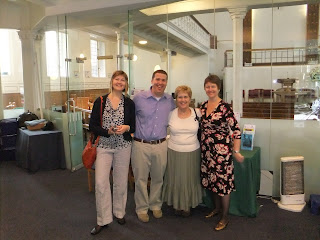
Katarina, Robert, me, and Andrea in the vestibule of the church, which serves as a gathering place and refuge for anyone passing by during the week. The church is located in London's West End sandwiched between an affluent neighborhood and the historic impoverished area that was the setting for Charles Dickens' novels. Doors are opened from 8:00--4:00 every day to the poor and homeless, as well as individuals and businesses wishing to use the facilities for auditions, play practice, and other community related meetings. Coffee, tea, and snacks are always available. The outreach from the vestibule is is a major undertaking, requiring a full time facilities manager and numerous volunteers to staff the welcome desk.

Robert and Willim bidding farewell on our day of departure. Bloomsbury church can be seen in the background.
UK Journal Continued

On Saturday night, Robert had arranged for us to go with two of his Bloomsbury friends to dinner and a play. He had bought us all tickets to Journey's End, at the Duke of York Theater, a fairly small auditorium with an intimate atmosphere. We had marvelous seats at center stage, only a few rows back, which enhanced our sense of being right there in the middle of the action. The drama is "set in a World War I bunker in St. Quentin, France, as a group of British officers await their day of reckoning and a young Captain Stanhope tries to galvanize his men who are preparing to raid the enemy across No Man's Land." (blurb from Amazon.com) The play is suspenseful, moving, and darkly funny, as it reveals the range of emotions and responses of the soldiers facing their fate, which will be determined by the rigid and inept decisions being made from the command center.
Coincidentally, I had recently read several books set in the era surrounding the Great War that provided a context for the play and heightened its impact for me as a viewer. One was Colonel Roosevelt, the third of Edmund Morris's brilliant trilogy on Theodore Roosevelt. It explores TR's life after the presidency amidst events leading the US into a much debated decision to abandon Wilson's position of neutrality and join the war on the side of England and France, against Germany. TR, who repeatedly denounced Wilson for his refusal to prepare the military for eventual conflict, believed that war was inevitable and necessary. He threw his support behind the war effort and encouraged his sons to enlist in officer training and volunteer to lead in the action.
In Ken Follette's Fall of Giants, a fascinating "epic that traces the lives of 5 interrelated families and the impact of war and its aftermath on their lives," (another blurb from Amazon.com) I got a sense of the gruesome reality of trench warfare and the magnitude of suffering caused by a war that took 15 million lives and imposed 20 million casualties. Follette does a masterful job of conveying the senselessness of brave soldiers marching off to be slaughtered, pawns in a war game controlled by stubborn and inept decision makers using outmoded and faulty war strategy. He personalizes the losses for the reader as he tells of the tiny Welch mining town in the aftermath of a major battle on the Western front, where one of the main character's family trembled at their door as they were passed by and spared from one of the hundreds of dreaded telegrams that were being delivered to their friends and neighbors informing them that a son had been sacrificed in the battle.
Two of the books I read dealt with the decade after the Armistice in 1918, and the disillusionment and trauma and loss experienced by an entire generation impacted by the Great War. In Paris Wife, a novel set in the late 1920's, Paula McLain explores the lingering impact of the war upon the lives of the lost generation of artists and writers living in Paris, told from perspective of Ernest Hemmingway's first wife Hadley Richardson. In Winter Ghosts, Kate Mosse writes about a young man seeking to deal with the loss of the brother he idolized, more than a decade after he went off to war and never returned.
Having so recently read all of these works, I was sensitized to the intricacies of the drama and was profoundly affected by its content. The play ended, predictably, with the officers, fully armed, rushing out of the bunker and onto the battlefield. Darkness and then the terrible sound of explosions and war cries followed. When the noise stopped, the curtain fell, and slowly rose again revealing the muddy boots of the cast, who were lined up across the stage in military formation, still dressed in combat fatigues and helmets. They stood ghostlike and immovable in the smoke and haze, against the backdrop of a printed page, taken from a roster of British troops killed in the war. Thunderous applause from the audience was followed by the shuffling of play goers exiting the theater in complete silence. What a production! The play is moving to Broadway later this year and will be re-cast with Americans. See it if you can. It is well worth the time and money.
After the play, we found a great French restaurant and visited with Katarina and Andrea over dinner. The two sisters had immigrated to the UK from Eastern Europe after their native Czecholslovakia split in 2009 along ethnic lines into the Czech Republic and Slovakia. Katarina and Andrea were Slovaks who found themselves in a newly formed country with limited opportunity and promise.
They began sharing a flat in London after Andrea completed her seminary education and was hired at Bloomsbury Church in pastoral counseling and visitation. Andrea, the more reserved of the sisters, had been instrumental in introducing Robert to the Bloomsbury parishioners and in involving him in some of the pastoral duties that he was eager to experience. Katarina, who also worked part time at the church, covering the front desk, entertained us with her back stage impressions of some of the more staid and traditional members of the congregation, as well as her candid views on several aspects of the politics of the church. I learned that some church issues are universal, and that the competing views of the older and younger generations on how the church will remain relevant in today's society is one of them. The conversation was lighthearted and fun, a welcome contrast to the visceral experience of war and conflict that we had just experienced from attending the 3 hour play.
The evening was one of the highlights of our trip. Unfortunately, we forgot to take any pictures and thus this narrative will have to replace the photos.
Friday, August 26, 2011
UK Journal
I developed a case of pre-trip jitters about a week before leaving on my trip to the UK. It had been a long time since I had flown extensively and I was nervous about navigating through security and customs as well as dreading the 8 hour flight. As an avid viewer of the 7:00 o'clock evening news, I recalled Brian Williams' coverage of heightened security measures at airports, the indignity suffered by passengers required to undergo body searches, and, most troubling of all, the incidents of pilots falling asleep. Falling asleep? I had never dreamed of that possibility. I always thought that once you were up in the air, that was the safest time.
I packed and repacked my suitcase, trying to decide what to take and what to leave behind, ignoring the advice of travel guru Rick Steves to pack only the things that you will absolutely need, and then only take half of that. ("Remember," Rick says, "anything you pack, you will lug around with you everywhere you go." So true, as I later recalled while crammed onto the London Tube at rush hour, loaded down with all of my precious belongings that I could not leave behind).
As the average temperature in Winston-Salem was 95, and more like 98 in my bedroom where I was assembling and trying on mix and match ensembles and practice packing, I was having a terrible time imagining that it could possibly be 72 degrees in London and that I would even be able to tolerate a light sweater. Consequently, I packed way too few warm things, reasoning that I could always layer up if I got cold. Remembering that we were also going to Scotland where it would be even a few degrees cooler and that we would be outside at night when we attended the Military Tattoo, I threw in my dingy yellow fleece hoodie at the last minute and ended up living in it for the entire trip. It is now on my "things to burn" list.
Also fueling this case of pre-trip jitters was a nagging fear of the baggage getting lost and me arriving in London without clean underwear and a change of clothes. From past experience with overseas flights, I realized that if that happened, I would be forced to spend the first few days of my trip wandering around London in my wrinkled black jersey pants, and white ballet top dribbled with marinara sauce from the pasta dish served in the cardboard TV dinner tray that I would be lifting to my mouth on a rickety plastic fork, just as the 300 pound passenger in the seat in front of me would decide to recline into my lap, forcing the fork full of food down my shirt.
To prevent such a catastrophe from ruining my first days in London and to make sure that I would not be deprived of anything I might need on the 8 hour flight, I determined to carry on board with me a change of clothes and shoes, makeup, medication, a tiny sewing kit, first aid items, and little samples of anything I might need, in addition to Kindle, camera, cell phone, passport, US and British currency, credit cards, and all confirmations and reservations for hotels and events. If I had been traveling into the wilds of Borneo, I could not have been more prepared.
In my pre-trip obsession, I visited the US Airways website and read everything I could about getting ready for a trans Atlantic flight. Additional security measures had been put in place since my last trip abroad, as Brian Williams so helpfully pointed out, and I wanted to make sure I was updated on all of them. I carefully followed all instructions to separate out liquids and gels and have them ready for inspection at the security gate. I crammed all of my tiny samples of tooth paste, cleanser, moisturizer, eye drops, and antiseptic hand cleaner into a plastic bag where they would be visible. Then, I made certain that a 10 day supply of each of the aforementioned were packed into the bag that I would be checking, so that I would be amply supplied for the remainder of the trip, if and when I became reunited with my suitcase.
By the time August 4 finally arrived, I had completely worn myself out in preparation and anticipation. Fatigue may be just the cure for the pre-trip jitters. Having made it successfully through all of the boarding procedures, and seated on the plane ready for take off, I had only enough energy left to briefly consider the terrible possibility that the pilot might fall asleep and we might go plunging into the Atlantic Ocean in the dark of night, never to be heard from again.
Momentarily, I heard the comforting Southern drawl of the pilot, briefing us on the flight and announcing that we would be taking off in the next 10 minutes. I relaxed into my seat and thought, "This boy's not going to be falling asleep. He's going to get us there without a hitch. All I have to do now is make it through the first 10 minutes of the flight--they say the takeoff and landings are the most dangerous. Once we get in the air I can relax."
And then, my attractive young seatmate, who I later found out was on her way to London to Kings College for her first year of medical school, turned to me and said, "Don't you just love to fly? I especially like the take off. It gives me such a rush." And I said, "Oh, yes," and closed my eyes while we lifted off.
The flight was long but smooth as silk. When we began our descent to Gatwick Airport a little after 7:00 a.m. London time, a tinge of the flying jitters returned and I braced myself for the landing--the second most dangerous part of the trip. We touched down with feather like motion. It was such a gentle landing that it must have impressed the rest of the passengers as well because a spontaneous round of applause broke out in the cabin as we taxied off the runway. That Southern boy knew how to fly a plane!
With feet planted on Terra firma and loaded down with the baggage that had miraculously not gotten lost, Harry and I set out for Victoria Station, where we met up with Robert, who was a sight for sore eyes after being gone for 3 months, living in London and working at Bloomsbury Church. And, with that reunion, we began our tour of London, with Robert as our guide.
Eager to show us all of the sights, Robert took us on a walking tour of Covent Garden, the Opera House, Piccadilly Circus, and Trafalgar Square. We finished the day at a great French restaurant and then crashed for the night in our rooms at the Raddison.

View from our Hotel window in Bloomsbury.

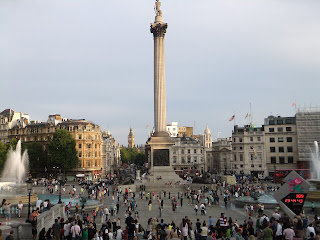
Statue of Admiral Lord Nelson, hero of the Battle of Trafalgar


St. Paul's Cathedral is the backdrop for Henry's green cars, which made the trip with us.
Statue of Thomas a Becket where we overheard the British mother explaining to her small son the martyrdom of the saint: "He and King Henry (II) were best friends and the king got very cross with him--and he had him killed."

A bit of British humor on the sign for Hung, Drawn and Quarterd, a pub below the flat where Robert stayed with Margaret and Keith, in the City of London. It reads:


The Globe Theater

I packed and repacked my suitcase, trying to decide what to take and what to leave behind, ignoring the advice of travel guru Rick Steves to pack only the things that you will absolutely need, and then only take half of that. ("Remember," Rick says, "anything you pack, you will lug around with you everywhere you go." So true, as I later recalled while crammed onto the London Tube at rush hour, loaded down with all of my precious belongings that I could not leave behind).
As the average temperature in Winston-Salem was 95, and more like 98 in my bedroom where I was assembling and trying on mix and match ensembles and practice packing, I was having a terrible time imagining that it could possibly be 72 degrees in London and that I would even be able to tolerate a light sweater. Consequently, I packed way too few warm things, reasoning that I could always layer up if I got cold. Remembering that we were also going to Scotland where it would be even a few degrees cooler and that we would be outside at night when we attended the Military Tattoo, I threw in my dingy yellow fleece hoodie at the last minute and ended up living in it for the entire trip. It is now on my "things to burn" list.
Also fueling this case of pre-trip jitters was a nagging fear of the baggage getting lost and me arriving in London without clean underwear and a change of clothes. From past experience with overseas flights, I realized that if that happened, I would be forced to spend the first few days of my trip wandering around London in my wrinkled black jersey pants, and white ballet top dribbled with marinara sauce from the pasta dish served in the cardboard TV dinner tray that I would be lifting to my mouth on a rickety plastic fork, just as the 300 pound passenger in the seat in front of me would decide to recline into my lap, forcing the fork full of food down my shirt.
To prevent such a catastrophe from ruining my first days in London and to make sure that I would not be deprived of anything I might need on the 8 hour flight, I determined to carry on board with me a change of clothes and shoes, makeup, medication, a tiny sewing kit, first aid items, and little samples of anything I might need, in addition to Kindle, camera, cell phone, passport, US and British currency, credit cards, and all confirmations and reservations for hotels and events. If I had been traveling into the wilds of Borneo, I could not have been more prepared.
In my pre-trip obsession, I visited the US Airways website and read everything I could about getting ready for a trans Atlantic flight. Additional security measures had been put in place since my last trip abroad, as Brian Williams so helpfully pointed out, and I wanted to make sure I was updated on all of them. I carefully followed all instructions to separate out liquids and gels and have them ready for inspection at the security gate. I crammed all of my tiny samples of tooth paste, cleanser, moisturizer, eye drops, and antiseptic hand cleaner into a plastic bag where they would be visible. Then, I made certain that a 10 day supply of each of the aforementioned were packed into the bag that I would be checking, so that I would be amply supplied for the remainder of the trip, if and when I became reunited with my suitcase.
By the time August 4 finally arrived, I had completely worn myself out in preparation and anticipation. Fatigue may be just the cure for the pre-trip jitters. Having made it successfully through all of the boarding procedures, and seated on the plane ready for take off, I had only enough energy left to briefly consider the terrible possibility that the pilot might fall asleep and we might go plunging into the Atlantic Ocean in the dark of night, never to be heard from again.
Momentarily, I heard the comforting Southern drawl of the pilot, briefing us on the flight and announcing that we would be taking off in the next 10 minutes. I relaxed into my seat and thought, "This boy's not going to be falling asleep. He's going to get us there without a hitch. All I have to do now is make it through the first 10 minutes of the flight--they say the takeoff and landings are the most dangerous. Once we get in the air I can relax."
And then, my attractive young seatmate, who I later found out was on her way to London to Kings College for her first year of medical school, turned to me and said, "Don't you just love to fly? I especially like the take off. It gives me such a rush." And I said, "Oh, yes," and closed my eyes while we lifted off.
The flight was long but smooth as silk. When we began our descent to Gatwick Airport a little after 7:00 a.m. London time, a tinge of the flying jitters returned and I braced myself for the landing--the second most dangerous part of the trip. We touched down with feather like motion. It was such a gentle landing that it must have impressed the rest of the passengers as well because a spontaneous round of applause broke out in the cabin as we taxied off the runway. That Southern boy knew how to fly a plane!
With feet planted on Terra firma and loaded down with the baggage that had miraculously not gotten lost, Harry and I set out for Victoria Station, where we met up with Robert, who was a sight for sore eyes after being gone for 3 months, living in London and working at Bloomsbury Church. And, with that reunion, we began our tour of London, with Robert as our guide.
Eager to show us all of the sights, Robert took us on a walking tour of Covent Garden, the Opera House, Piccadilly Circus, and Trafalgar Square. We finished the day at a great French restaurant and then crashed for the night in our rooms at the Raddison.

View from our Hotel window in Bloomsbury.

Trafalgar Square from the National Gallery

Statue of Admiral Lord Nelson, hero of the Battle of Trafalgar

For the first time ever, a painting is being made into a ‘living wall’ outside the National Gallery. With more than 8,000 live plants, General Electric has brought a masterpiece to life with a version of Van Gogh’s famous painting A Wheatfield, with Cypresses as part of the Gallery’s carbon reduction plan.

The M and M super store at Leicester Square--3 giant stories filled with M and M related products.
Saturday, August 6
We headed out for a walking tour of the city. It was a glorious day--cool and clear and sunny. After taking a full English breakfast in the gardens of Victoria Embankment, we walked our legs off, visiting site after site along the Thames.

St. Paul's Cathedral is the backdrop for Henry's green cars, which made the trip with us.


A bit of British humor on the sign for Hung, Drawn and Quarterd, a pub below the flat where Robert stayed with Margaret and Keith, in the City of London. It reads:
I went to see Major General Harrison hung, drawn, and quartered.
He was looking as cheerful as any man could in that condition.
Samuel Pepys, 13 October 1660

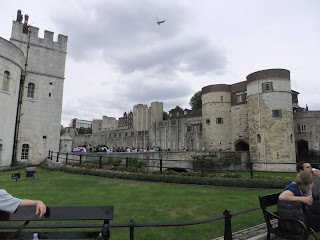
Tower of London

Tower of London Bridge (Not to be confused with the "London Bridge is Falling Down bridge" which is not nearly as impressive and is nearby)
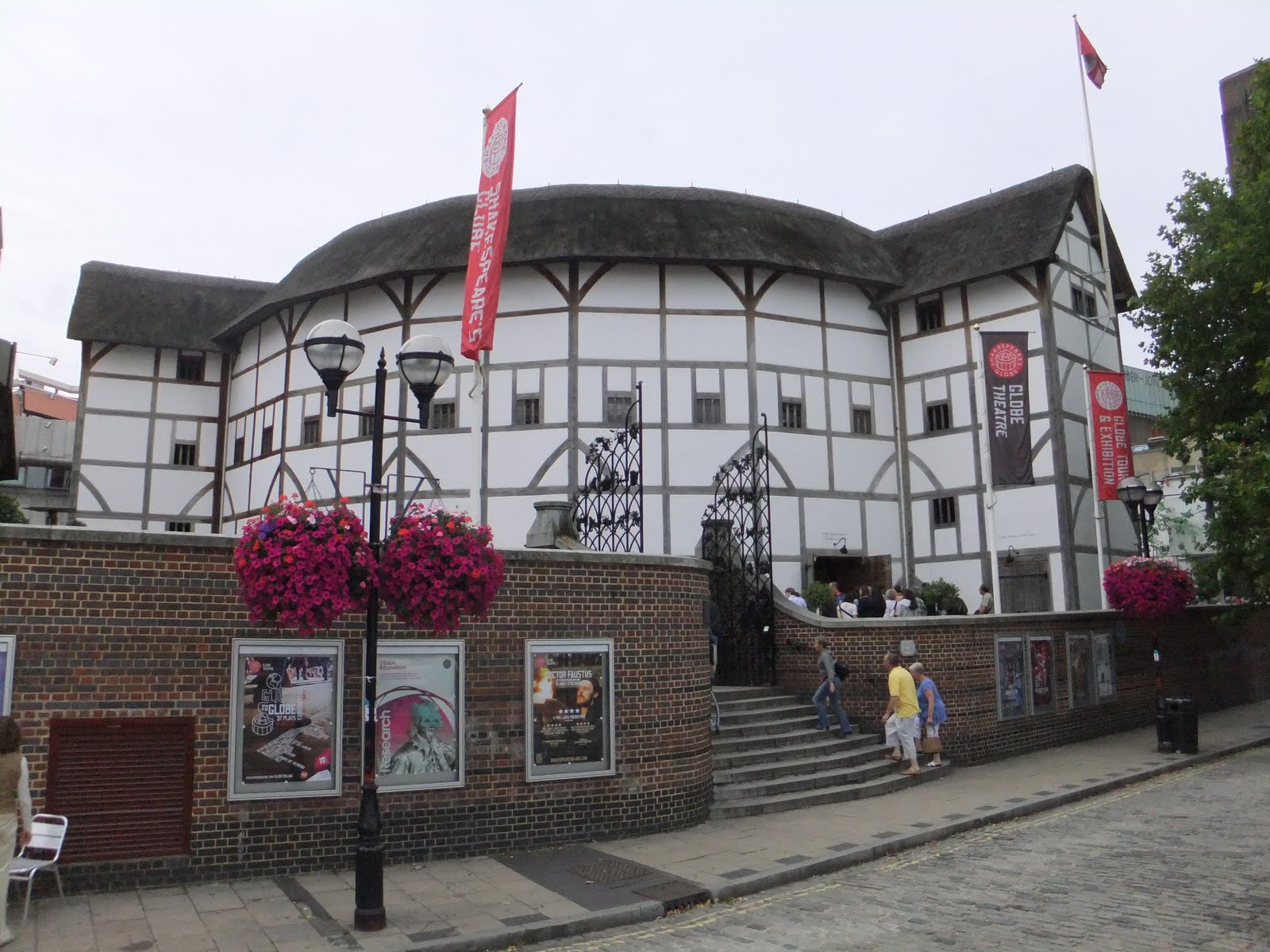
The Globe Theater

The ubiquitous red double decker bus.
Tuesday, August 23, 2011
Return from the UK
Before beginning the retirement project blogs in earnest, I want to spend some time recording my thoughts and impressions of a 12 day trip to the UK that I just completed, with sons Robert and Harry. We had such a full itinerary that already I'm forgetting details that need to be preserved for future reflection and enjoyment . Robert has recorded the days and sequence of our trip in his Deamondeaconinlondon blog, which is linked below. I will not try to repeat that, but will fill in details from my perspective.
Although jet lag and the horrible exchange rate between the dollar and the pound have left me depleted both physically and financially, the notion of a "next trip" is already stirring. My limited travel experience has confirmed two things: The extraordinary beauty of our planet and the strong cord that binds me to others who inhabit its surface now and in times gone by.
It came to me as I was standing on top of Edinburgh Castle, looking out over the medieval city built on volcanic rock, cascading down to the buildings of the Georgian New Town and continuing on out to the shore of the Firth of Forth, framed by mountains reminiscent of the Blue Ridge. I was overcome by the realization that our planet is truly a gorgeous, magnificent home. I resolved then and there to take advantage of every opportunity to travel and to see and experience more of it.
As we explored the city of London on our night of arrival, wandering through Piccadilly Circus and pausing at Trafalgar Square to mingle with the crowd to take in the breathless views of the Thames and of Big Ben and Parliament rising into the evening sky, gilded by the rays of the setting sun; as we visited the Tower of London and the Globe Theater next day and tried to imagine the total devastation of the fire of 1666 on an already overcrowded city; as we snapped pictures of the the statue of a dying Thomas a Becket in the gardens of St. Paul's Cathedral and overheard a British mother helping her son make sense of the event by explaining that the "the king was very cross with his best friend and had him killed"; I was stirred by the connection that I felt to all humanity both present and past who had visited those sites for the first time as I was doing, and experienced the wonder and excitement of discovery that I felt in those moments.
All that being said, I was equally excited when Robert and I boarded United Airways Flight 733, bound for Charlotte on August 15. Touching down safely at Charlotte Douglas International after a 9 hour flight, we hurried to get our baggage, find our car in long term parking, and head up I-77 to Winston-Salem. When we finally crossed the Yadkin River, passed by Clemmons, and spotted the Silas Creek exit, I remembered that there really is no place like home.
More details and pictures of the trip to follow.
Although jet lag and the horrible exchange rate between the dollar and the pound have left me depleted both physically and financially, the notion of a "next trip" is already stirring. My limited travel experience has confirmed two things: The extraordinary beauty of our planet and the strong cord that binds me to others who inhabit its surface now and in times gone by.
It came to me as I was standing on top of Edinburgh Castle, looking out over the medieval city built on volcanic rock, cascading down to the buildings of the Georgian New Town and continuing on out to the shore of the Firth of Forth, framed by mountains reminiscent of the Blue Ridge. I was overcome by the realization that our planet is truly a gorgeous, magnificent home. I resolved then and there to take advantage of every opportunity to travel and to see and experience more of it.
As we explored the city of London on our night of arrival, wandering through Piccadilly Circus and pausing at Trafalgar Square to mingle with the crowd to take in the breathless views of the Thames and of Big Ben and Parliament rising into the evening sky, gilded by the rays of the setting sun; as we visited the Tower of London and the Globe Theater next day and tried to imagine the total devastation of the fire of 1666 on an already overcrowded city; as we snapped pictures of the the statue of a dying Thomas a Becket in the gardens of St. Paul's Cathedral and overheard a British mother helping her son make sense of the event by explaining that the "the king was very cross with his best friend and had him killed"; I was stirred by the connection that I felt to all humanity both present and past who had visited those sites for the first time as I was doing, and experienced the wonder and excitement of discovery that I felt in those moments.
All that being said, I was equally excited when Robert and I boarded United Airways Flight 733, bound for Charlotte on August 15. Touching down safely at Charlotte Douglas International after a 9 hour flight, we hurried to get our baggage, find our car in long term parking, and head up I-77 to Winston-Salem. When we finally crossed the Yadkin River, passed by Clemmons, and spotted the Silas Creek exit, I remembered that there really is no place like home.
More details and pictures of the trip to follow.
Subscribe to:
Posts (Atom)